
So, you’re looking to get into the world of vertical work or play, huh? Maybe you’re a pro who needs to get up high for your job, or perhaps you’re an adventurer who loves exploring caves or scaling cliffs. Whatever your reason, a power rope ascender can make a huge difference.
These gadgets are pretty cool because they help you climb ropes with less effort than doing it all by hand. But with so many options out there, how do you pick the right one?
This guide will walk you through everything you need to know about choosing the perfect power rope ascender, making sure you get something that’s safe, reliable, and just right for what you do.
Clues Before Choosing a Power Rope Ascender
- Power rope ascenders come in different types, from basic mechanical ones to advanced powered systems, each with its own benefits.
- When picking a power rope ascender, think about how much it weighs, its battery life, and what kind of ropes it can work with.
- Always check for safety certifications and understand the braking systems and emergency features of any power rope ascender you consider.
- The best power rope ascender for you depends on what you’ll be using it for, whether it’s for work, fun, or rescue missions.
- Keeping your power rope ascender clean and checking it regularly are crucial for ensuring it lasts a long time and remains safe to use.
Understanding Power Rope Ascender Types
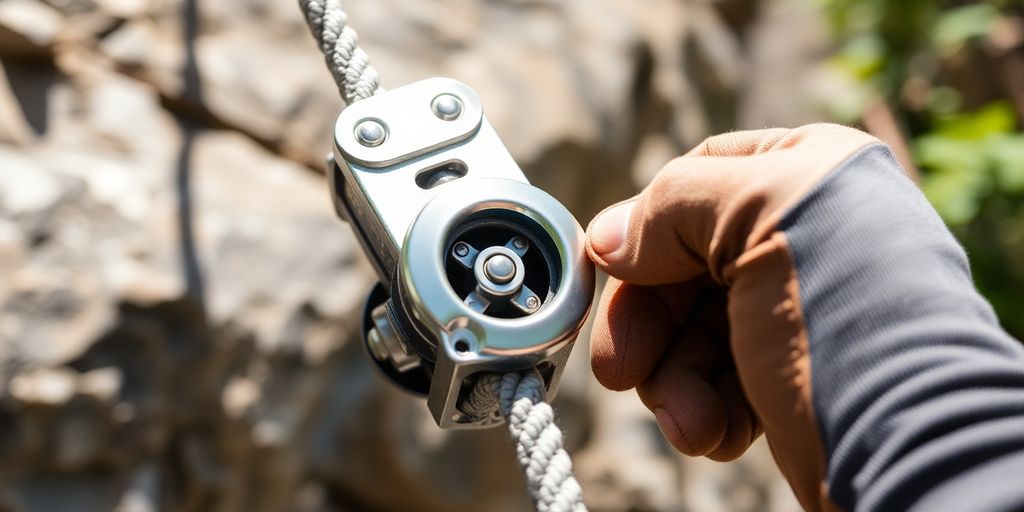
Mechanical Ascenders Explained
Mechanical ascenders? They’re your ticket to easier rope climbs. Instead of relying solely on friction hitches, these devices use cams or other mechanisms to grip the rope. This makes ascending more efficient and less tiring. Think of them as your personal rope-climbing assistant. We’ve found that even carrying prusik loops as a backup is a smart move, just in case.
Powered Versus Manual Systems
It’s a classic showdown: power versus manual. Manual ascenders require you to use your muscles to move up the rope. Powered ascenders, on the other hand, use a motor to do the work for you.
- Powered ascenders are great for long ascents or when you’re carrying heavy loads.
- Manual ascenders are lighter and simpler, making them a good choice for shorter climbs or when weight is a concern.
- Consider the trade-offs between power, weight, and complexity when making your choice.
Choosing between powered and manual systems really boils down to what you need the ascender for. If you’re doing a lot of heavy lifting, powered is the way to go. But if you’re looking for something lightweight and simple, manual is a solid choice.
Specialized Ascender Designs
Ascenders aren’t one-size-fits-all. There are specialized designs for different applications. Some are designed for rope accessories, others for specific rope diameters, and still others for particular industries. For example:
- Some ascenders are designed for industrial rope access, with features like integrated safety locks and backup systems.
- Others are built for recreational climbing, with a focus on lightweight and ease of use.
- Rescue ascenders often have features like quick-release mechanisms and the ability to be operated with one hand.
Key Features Of A Power Rope Ascender
Weight And Portability Considerations
When we’re choosing a power rope ascender, weight and portability are super important. Lightweight ascenders AWAH Z3 Prof are easier to carry on long climbs or in situations where every ounce counts. Think about the overall size and how easily it packs into your gear. A heavier ascender might offer more power or durability, but it could also slow you down significantly.
Battery Life And Power Source
Battery life is a big deal. We need to know how long the ascender will run on a single charge. Consider these points:
- Battery Capacity: Higher capacity means longer run times.
- Charging Time: How long does it take to fully recharge the battery?
- Battery Type: Is it a standard battery or a proprietary one? Can we easily swap batteries?
A reliable power source is key. We don’t want to be stuck halfway up a rope because the battery died. Some ascenders use rechargeable batteries, while others might use replaceable ones. It’s worth thinking about what works best for our needs.
Rope Compatibility And Diameter
Not all ascenders work with all ropes. We need to check the manufacturer’s specifications to make sure the ascender is compatible with the rope diameter we plan to use.
- Rope Diameter Range: What’s the acceptable range of rope diameters?
- Rope Type: Is it designed for static or dynamic ropes?
- Material Compatibility: Does the ascender work well with different rope materials?
Using the wrong rope can damage the ascender or, worse, lead to a dangerous failure.
Safety Standards For Power Rope Ascenders
Certifications And Regulations
When we’re talking about power rope ascenders, safety isn’t just a suggestion—it’s the law (well, kinda). Certifications like CE or UIAA are what we look for. These marks tell us the ascender has been put through the wringer and meets certain safety benchmarks. It’s like a seal of approval, making sure the gear won’t fail when you need it most. Always double-check for these certifications before trusting your life to a piece of equipment.
Braking Mechanisms And Control
Braking mechanisms are super important. They’re what stops you from plummeting if something goes wrong. We need to understand how these systems work. Some ascenders have automatic braking, while others rely on manual control. It’s all about knowing the limits and how to react in an emergency.
Make sure the braking is smooth and reliable, not jerky or unpredictable. Control is key—you want to feel in charge, not like you’re just along for a wild ride.

Emergency Descent Capabilities
Things can go south real quick, so having a backup plan is a must. Emergency descent features are non-negotiable. Can you quickly and safely lower yourself if the motor quits or the rope gets jammed? Some ascenders have built-in systems for this, while others might require additional gear.
We always practice emergency descents before relying on them in a real situation. It’s better to be over-prepared than under when you’re hanging hundreds of feet in the air.
Knowing how to self-rescue is as important as knowing how to ascend. Always have a plan, practice it regularly, and make sure your team knows it too. Complacency is the enemy when it comes to safety at height.
Choosing The Right Power Rope Ascender For Your Activity
Choosing the right power rope ascender depends on what you plan to do with it. It’s not a one-size-fits-all kind of deal. We need to think about the specific demands of your activity to make the best choice. Let’s break it down.
Industrial Rope Access Applications
For industrial rope access, think about durability and reliability above all else. These ascenders need to withstand daily heavy use. We’re talking about tasks like window cleaning on skyscrapers or inspecting bridges. Battery life is super important, as is the ascender’s ability to handle different rope diameters. Consider a Ronin product for these demanding jobs.
Recreational Climbing And Caving
If we’re using a power ascender for fun – climbing or caving – weight and portability become bigger factors. We don’t want to lug around a super heavy device all day. Rope compatibility is still key, but we might be able to sacrifice some battery life for a lighter model.
Think about how often we’ll actually use it, too. If it’s just for occasional assistance, a less expensive model might be fine.
Rescue Operations And Self-Belay
Rescue operations demand the most reliable and feature-rich ascenders. These situations are high-stakes, and we need equipment we can trust. Emergency descent capabilities are a must-have, as are robust braking mechanisms. Self-belay situations also require careful consideration of safety features. We need to be able to depend on the ascender to hold our weight securely.
When it comes to rescue or self-belay, don’t skimp on quality. It’s better to invest in a top-of-the-line ascender than to risk our safety with a cheaper, less reliable model. Think about certifications and regulations, too. Make sure the ascender meets all the necessary safety standards.
Here’s a quick rundown:
- Industrial: Heavy-duty, long battery life, various rope sizes.
- Recreational: Lightweight, portable, decent battery life.
- Rescue: Reliable, emergency descent, robust braking.
Maintenance And Care For Your Power Rope Ascender
Regular Inspection Protocols
Okay, so we’ve all been there – you’re pumped to get out and use your gear, but hold up! Before we even think about clipping in, let’s talk inspections. Think of it like this: your ascender’s life depends on you, and yours might depend on it.
- Check for any visible damage: cracks, bends, or wear.
- Make sure all moving parts move freely.
- Inspect the teeth or cams for sharpness and proper engagement.
It’s easy to skip this step, especially when you’re in a hurry, but trust us, a few minutes of inspection can save you a whole lot of trouble (or worse) down the line.
Cleaning And Storage Best Practices
Alright, let’s talk about keeping our ascenders clean and happy. Dirt and grime are the enemy, slowly eroding the lifespan of your gear. Here’s the lowdown:
- After each use, wipe down your ascender with a clean, damp cloth.
- For tougher grime, use a mild soap and water solution. Just make sure to rinse it thoroughly!
- Store your ascender in a dry, cool place away from direct sunlight and chemicals.
Troubleshooting Common Issues
So, things aren’t working as smoothly as they should? Don’t panic! Let’s run through some common problems and how to tackle them.
- Slippage: If your ascender is slipping on the rope, check for dirt or excessive wear on the teeth. Clean it or consider replacing worn parts.
- Binding: If the ascender is binding or difficult to move, lubricate the moving parts with a silicone-based lubricant. Avoid oil-based lubricants, as they can attract dirt.
- Rope Damage: Always inspect your rope for damage if you experience any issues with your ascender. A damaged rope can compromise the ascender’s performance and your safety.
Integrating A Power Rope Ascender With Other Gear
Harness And Attachment Points
Choosing the correct harness is key. We need something comfortable, durable, and with multiple attachment points. The harness must be compatible with your ascender and other gear. Think about how the ascender will connect and distribute weight. A good fit makes all the difference for long days on the rope.
Pulleys And Hauling Systems
Pulleys are our friends when it comes to hauling. They reduce friction and make lifting heavy loads easier. We often use them in conjunction with our ascenders to create efficient hauling systems. Consider the pulley’s efficiency rating; a higher rating means less energy wasted.
- Simple hauling: Ascender + pulley.
- Complex hauling: Multiple pulleys for increased mechanical advantage.
- Progress capture: Essential for preventing backsliding.
Descenders And Belay Devices
Descenders are just as crucial as ascenders. We need a reliable way to get back down! Many descenders offer assisted braking, which is a huge plus for safety. Power Ascender can be used in conjunction with belay devices for top belays, especially for less experienced climbers.
It’s important to practice transitions between ascending and descending. Smooth transitions save time and energy. We always double-check our connections before switching between devices.
Advanced Techniques With A Power Rope Ascender
Efficient Ascent Strategies
Let’s talk about getting up that rope fast. Efficiency is key when you’re spending a lot of time ascending. We’ve found that a smooth, rhythmic motion is way less tiring than jerky pulls. Think about using your legs more than your arms – it’s a game changer.
Also, experiment with different body positions to find what works best for you. It’s all about finding that sweet spot where you’re using the least amount of energy to get the most height.
Managing Rope Twisting
Rope twisting can be a real pain, especially on long ascents. It’s like the rope has a mind of its own! One trick we’ve learned is to use a swivel rope blocks above your ascender. This lets the rope rotate freely and prevents those annoying twists from building up.
Another thing to watch out for is your body position. Try to keep yourself aligned with the rope to minimize any sideways pull that can cause twisting.
Progress Capture And Hauling
Sometimes, you need to stop and secure your position, or even haul up some gear. That’s where progress capture devices come in handy. A simple prusik hitch can work in a pinch, but mechanical devices like the Petzl Tibloc are much more efficient.
We always carry an extra short loop which will come in handy if you need to setup a progress capture device for hauling. Prusik loops are also used in a variety of rescue setups and self-belay for abseiling.
For hauling heavier loads, consider using a pulley system. A 3:1 or 5:1 mechanical advantage can make a huge difference when you’re trying to lift something heavy. Just remember to keep everything organized and use locking carabiners to prevent any accidental releases.
The Evolution Of Power Rope Ascender Technology

Historical Context Of Ascenders
From basic clamps to complex mechanical systems, the journey of ascenders is pretty wild. Early designs, like Henri Brenot’s metal clamps, were tough to use but groundbreaking for their time. Then came Ferdinand Petzl’s tools, which really changed caving and mountaineering. It’s amazing to see how far we’ve come.
Modern Innovations In Design
Today, we’ve got ascenders that pioneers could only dream of. The Ronin Lift Power Ascender is a prime example, offering battery-powered assistance for both work and play. These modern ascenders are lightweight, durable, and packed with features that enhance safety and efficiency. You can even buy them online now!
Future Trends In Power Rope Ascenders
What’s next for power rope ascenders? We’re likely to see even more integration with technology, like smart sensors and advanced materials. Expect lighter designs, longer battery life, and enhanced safety features. The future looks bright for Ascender Technology, with innovations that will continue to push the boundaries of what’s possible.
Conclusion
So, there you have it. Picking the right power rope ascender may seem like a lot at first, but it’s really about determining what you need it for. Think about where you’ll use it, how often, and what kind of ropes you’re working with.
Don’t just grab the first one you see. Take your time, review the different options, and ensure it feels right. A good ascender makes a big difference, keeping you safe and making your work or adventures a lot easier. It’s worth doing a little homework to get the best fit.
Frequently Asked Questions
What exactly is a power rope ascender?
Power rope ascenders are tools that help people climb ropes more easily and safely. They use power, like a motor, to pull you up the rope, making it much less tiring than climbing by hand.
Who typically uses a power rope ascender?
These devices are super helpful in many situations. They’re great for people who work high up, like window cleaners or rescue teams. Climbers and cavers also use them to save energy. Basically, anywhere you need to go up a rope without getting too tired, these ascenders come in handy.
Is it hard to learn how to use one of these devices?
While power ascenders make climbing easier, they’re not toys. You need to know how to use them correctly and understand all the safety rules. It’s always best to receive some training before using one on your own.
Are power rope ascenders safe to use?
Yes, safety is a big deal! Good power ascenders have special features to keep you safe, like ways to stop if something goes wrong and systems to prevent you from falling. They also usually meet strict safety standards set by experts.
How do I take care of my power rope ascender?
Taking good care of your ascender is key to making it last. You should clean it regularly, check it for any damage, and store it in a dry, safe place. Following the maker’s instructions will help a lot.
Can I use my power rope ascender with my other climbing gear?
You can use your power ascender with other climbing gear like harnesses, pulleys, and devices that help you go down the rope. They all work together to create a full system for moving up and down safely.


