
Getting around at height used to mean a lot of hard work, like climbing ladders or using manual ropes. But things are changing fast. The motorized ascender is a pretty cool tool that’s making it way easier and safer to go up and down. This article will look at how these devices work, what they’re used for, and where they might go in the future.
Motorized Ascender: The Evolution of Vertical Access Technology
Remember the days of pure muscle power? Hauling yourself up ropes, inch by inch? We’ve all been there. It was slow, tiring, and honestly, pretty risky. Manual ascenders were the only game in town for a long time. But let’s be real, our arms aren’t cranes. Now, motorized ascenders are changing everything. They offer a faster, safer, and less exhausting way to tackle vertical challenges.
Okay, so someone finally thought, “There has to be a better way!” Early powered ascent devices were clunky, heavy, and sometimes terrifying. Think of them as the Model T Fords of vertical access. They were groundbreaking, sure, but far from perfect. These early models paved the way, though. They showed us what was possible and sparked the innovation that led to today’s sleek, reliable motorized ascenders.
Motorized ascenders are not just a fancy upgrade; they’re a game changer. They’re more efficient, safer, and easier to use than ever before. The integration of advanced materials, better battery tech, and smart controls has made them indispensable in many industries.
We’ve seen a massive shift in how people approach vertical work. It’s not just about getting the job done; it’s about getting it done safely and efficiently. Motorized ascenders are at the forefront of this change.
Key Features of Modern Motorized Ascenders

Advanced Safety Mechanisms
We’ve seen some serious advancements in safety. Modern motorized ascenders come packed with features to keep us secure. Think about it: integrated sensors that detect slack rope, emergency stop buttons within easy reach, and automatic braking systems that kick in if something goes wrong.
These aren’t just nice-to-haves; they’re essential for working at height. Redundancy is key – multiple systems working together to minimize risk. It’s about peace of mind, knowing you’re backed up by reliable tech.
Power and Battery Performance
Battery life is a game-changer. We need ascenders that can last through a full workday without needing a recharge. Modern batteries are more efficient, offering longer run times and faster charging.
Plus, we’re seeing improvements in power management, so the ascender uses energy more intelligently. It’s not just about how long the battery lasts, but also how consistently it performs under different loads and conditions.
Ergonomic Design and Portability
Let’s face it, comfort matters. If an ascender is clunky and awkward, it’s going to slow us down and increase fatigue. That’s why ergonomic design is so important.
We’re talking about lightweight materials, adjustable harnesses, and intuitive controls. Portability is another big factor. We need ascenders that are easy to transport and set up, especially when working in remote or difficult-to-access locations.
A well-designed ascender should feel like an extension of your body, not a burden. It should allow for natural movement and reduce strain, so you can focus on the task at hand.
Practical Applications Across Industries
We’re seeing motorized ascenders pop up everywhere, changing how work gets done in some pretty crucial sectors. It’s not just about making things easier; it’s about opening up possibilities we didn’t even think were on the table before.
High-Rise Maintenance and Construction
Think about skyscrapers. Keeping them in shape means someone has to get up there, and that’s where motorized ascenders shine. They’re making tasks like window washing, facade repairs, and inspections way faster and safer. Instead of clunky scaffolding, workers can zip up and down with ease. It’s a game-changer for efficiency and construction projects.
Telecommunications and Tower Work
Cell towers, radio masts – they all need regular maintenance. Climbing these structures used to be a real grind, but motorized ascenders are changing that. They cut down on the physical strain, letting technicians focus on the actual work instead of just trying to get up there. Plus, it means faster response times for repairs, which keeps us all connected.
Rescue Operations and Confined Spaces
When things go wrong, speed is everything. Motorized ascenders are becoming essential tools for rescue teams, especially in tricky spots like confined spaces or steep terrain. They allow rescuers to quickly reach people in need, offering a safer and more efficient way to access locations and get them out of harm’s way. It’s about getting people home safe, and that’s what matters most.
Enhancing Safety with Motorized Ascenders
We all know safety is the priority, right? Motorized ascenders come with integrated fall arrest systems. These systems are designed to kick in immediately if something goes wrong. Think of it as a seatbelt for vertical work – always there, ready to protect. It’s a non-negotiable part of the package.
Redundant Safety Features
Redundancy is key. These ascenders aren’t relying on just one thing to keep you safe. We’re talking multiple safety mechanisms. Auto-brakes that engage when you let go, emergency stop buttons within easy reach, and descent modes that work even if the power goes out. It’s like having a backup plan for your backup plan.
Operator Training and Certification
Let’s be real, even the best equipment is only as good as the person using it. That’s why proper training and certification are so important. We need to know how to use these ascenders safely and effectively. It’s not just about pushing buttons; it’s about understanding the equipment, knowing the risks, and being prepared for anything.
Think of it this way: we wouldn’t let someone drive a car without a license, would we? Same goes for motorized ascenders. Training and certification are our licenses to operate safely and responsibly.
Operational Efficiency and Productivity Gains
Reduced Ascent and Descent Times
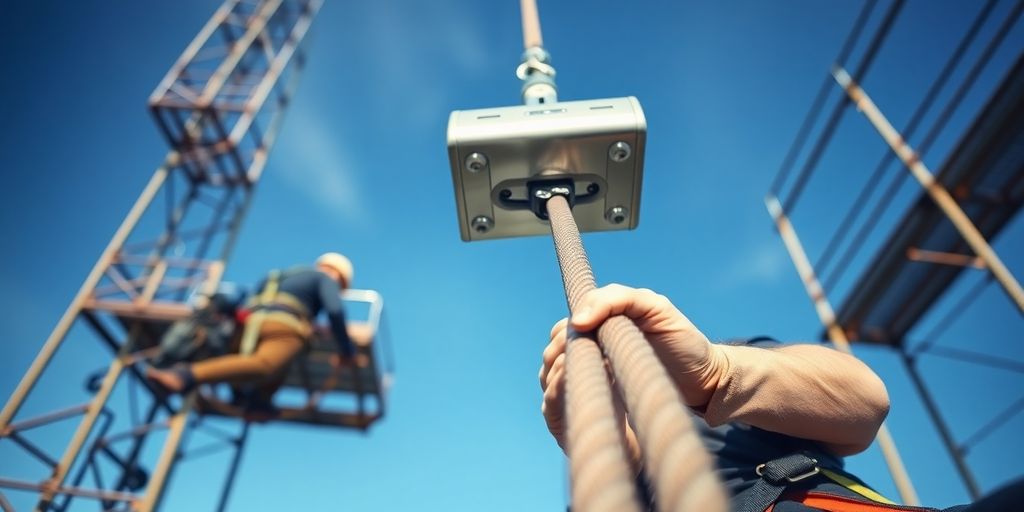
Okay, so picture this: no more slow climbs. We’re talking about getting up there fast. Motorized ascenders seriously cut down the time it takes to get to the work area. It’s like skipping the stairs and taking the elevator, but way cooler. Think about it – more time working, less time just getting there.
Minimizing Physical Fatigue
Let’s be real, climbing is tiring. Using ascenders, we’re not wiped out before we even start the job.
- Less strain on the body.
- More energy for the actual task.
- Fewer breaks needed.
Less fatigue means we can focus better and work safer. It’s a win-win.
Streamlined Setup and Demobilization
No one likes wasting time setting up or packing up. With motorized ascenders, we’re talking about a much smoother process. It’s all about getting in, getting the job done, and getting out without the fuss.
| Task | Manual Ascent | Motorized Ascent |
|---|---|---|
| Setup Time | 30 minutes | 15 minutes |
| Descent Time | 20 minutes | 10 minutes |
| Demobilization | 25 minutes | 15 minutes |
The Economic Impact of Motorized Ascenders
Okay, let’s talk money. We all know time is money, right? With motorized ascenders, we’re seeing some serious cuts in both labor costs and the time it takes to get things done.
Think about it: fewer people needed for a job, faster ascent planning, and less time spent on each task. That adds up to big savings. It’s not just about the initial cost of the equipment; it’s about the long-term gains in efficiency.
Investment in Professional Equipment
Sure, the initial price tag on a motorized ascender might make you blink. A PowerQuick ascender can cost a pretty penny, especially when you factor in extra batteries and a good harness. But here’s the thing: this isn’t just some gadget. It’s a professional tool that can transform how we work. It’s an investment in our safety, our efficiency, and our ability to tackle tough jobs.
- High initial cost, but…
- Increased efficiency justifies the expense.
- Durable equipment reduces long-term costs.
Long-Term Value and Durability
Let’s be real, nobody wants to buy equipment that’s going to fall apart after a few uses. That’s why durability is key. We need gear that can withstand the rigors of daily use in demanding environments. Motorized ascenders, when properly maintained, offer that long-term value.
They’re built to last, reducing the need for frequent replacements and minimizing downtime. Plus, the increased safety features can lead to lower insurance premiums and fewer workplace accidents. It’s a win-win.
Investing in quality equipment like motorized ascenders isn’t just about the immediate task at hand. It’s about building a sustainable and efficient operation for the future. It’s about equipping our teams with the tools they need to succeed, safely and effectively, for years to come.
Future Developments in Motorized Ascender Technology
We’re looking at a future where ascenders aren’t just tools, but integrated parts of a larger smart system. Imagine ascenders that communicate with building management systems, automatically log usage data, and even adjust performance based on real-time environmental conditions. This level of integration could revolutionize how we manage vertical access.
Lighter and More Powerful Designs
Weight and power are always top of mind. We’re pushing for lighter materials and more efficient motors. Think ascenders that are easier to carry, faster to deploy, and capable of handling heavier loads. This means:
- Improved battery technology for longer run times.
- Use of composite materials to reduce weight.
- More compact motor designs without sacrificing power.
Expanding Application Horizons
We see motorized ascenders moving beyond traditional industries. From rescue operations in remote locations to facilitating scientific research in challenging environments, the possibilities are endless. We’re exploring:
- Customized ascenders for specific tasks.
- Adapting ascenders for use in underwater environments.
- Developing ascenders for use in space exploration.
The future of motorized ascenders isn’t just about incremental improvements; it’s about fundamentally changing how we approach vertical access. We’re talking about safer, more efficient, and more versatile solutions that can tackle challenges we haven’t even imagined yet.
Conclusion
So, what’s the big takeaway here? Motorized ascenders, like the ones we’ve talked about, are a pretty big deal for getting up and down in tough spots. They make things way easier and safer for folks who work high up or in tight spaces.
It’s not just about going up faster; it’s also about not getting tired out and staying safe. These tools are changing how people do their jobs, making hard tasks simpler. It really shows how new ideas can make a real difference in the world, especially when it comes to getting to those hard-to-reach places.
Frequently Asked Questions
What exactly is a motorized ascender?
Motorized ascenders are special tools that help people climb up and down ropes easily. Unlike old ways of climbing that used only muscle power, these new devices have a motor to do the hard work. Think of them like a small, personal elevator for ropes. They make it much simpler and faster to get to high places, like the top of a tall building or a communication tower.
How safe are motorized ascenders to use?
These devices are packed with safety features. They often have systems that stop you from falling, extra backups in case something goes wrong, and emergency buttons. Plus, operators get special training to make sure they know how to use them safely and correctly. Safety is a top priority in their design.
Where are motorized ascenders typically used?
Motorized ascenders are super useful in many jobs. They’re great for fixing tall buildings, working on cell towers, and even helping in rescue missions where people need to get into tight spaces. They save time and make tough jobs easier for workers who have to go up and down ropes a lot.
Are motorized ascenders a good investment financially?
While the upfront cost might seem high, motorized ascenders can actually save money over time. They cut down on labour costs because jobs get done faster, and they last a long time. It’s an investment that pays off by making work safer and more productive.


