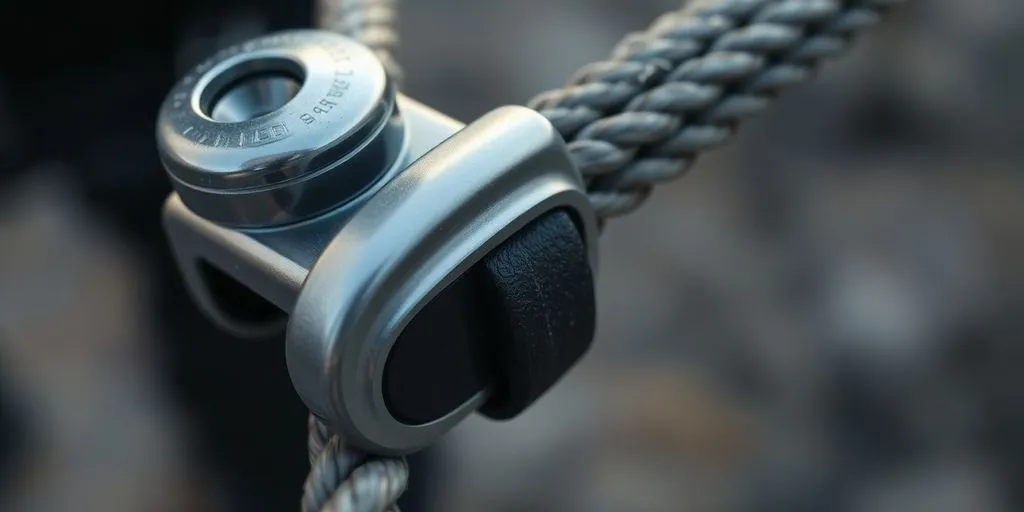
Stepping into the world of outdoor climbing ropes means you’ll eventually come across some pretty cool gear. One piece that’s super useful for getting up ropes is the handle ascender. But, like with all climbing stuff, knowing how to use it right, and more importantly, safely, is a big deal.
This article is all about making sure you’re clued in on how to master the handle ascender so you can climb with confidence.
What is a Handle Ascender?
Handle ascenders are our trusty companions when we need to climb a rope efficiently. They’re mechanical devices designed to grip a rope, allowing us to ascend it with relative ease. Think of them as a specialized tool for vertical movement.
They let us transfer our weight onto the rope, freeing our hands to move the ascender higher. It’s like a portable elevator for climbers!
Handle ascenders aren’t just simple clamps; they’re engineered with several key features:
- Ergonomic Handle: Designed for a comfortable grip, reducing hand fatigue during long ascents.
- Camming Mechanism: This is the heart of the ascender, using a toothed cam to grip the rope securely when weighted.
- Attachment Points: Holes or loops for connecting slings or aiders, allowing for efficient upward movement.
- Safety Catch: Prevents accidental release from the rope.
These features work together to provide a safe and efficient way to ascend ropes, whether we’re cleaning a big wall or setting up a Tyrolean traverse.
Choosing the Right Handle Ascender
Selecting the right handle ascender depends on our specific needs. Consider these factors:
- Rope Diameter: Ascenders are designed for specific rope sizes. Make sure the ascender is compatible with your rope.
- Handedness: Some ascenders are designed for right or left hands. Petzl’s Ascension offers both.
- Intended Use: Are we using it for big wall climbing, caving, or rescue work? Different ascenders are better suited for different applications.
- Cam Teeth Aggressiveness: For general rock climbing, avoid aggressive teeth that can damage your rope. For icy conditions, more aggressive teeth are preferable.
Essential Safety Protocols for Handle Ascenders
When we’re using handle ascenders, our lives are literally hanging by a thread – or, more accurately, a rope. That’s why it’s super important to always tie into the end of the rope. Think of it as our primary safety net.
It’s not just a suggestion; it’s the golden rule. We make sure our knot is solid and secure before even thinking about clipping in our ascenders. This way, if anything goes wrong with our ascenders, we’ve got a backup.
Okay, so we’ve got our rope tied off. Now what? We need to make sure our ascenders are properly connected to our harness. We always clip both ascenders into our harness using daisy chains and locking carabiners.
- Use locking carabiners – always.
- Double-check the connection.
- Distribute the load evenly.
This setup gives us redundancy. If one ascender fails, the other, connected to our harness, will keep us from falling. It’s like having a spare tire – we hope we never need it, but we’re sure glad it’s there.
Before we start ascending, we take a moment to double, triple, even quadruple-check that our ascenders are properly attached to the rope. It sounds basic, but it’s easy to get complacent, especially if we’re tired or distracted.
We make sure the cams are engaged and biting into the rope. We give each ascender a gentle tug to ensure it’s holding. It’s a simple step, but it can make all the difference. We also want to make sure that the ascenders are easy to use with one hand and that the handle grip is comfortable.
Proper Technique for Ascending with a Handle Ascender
Ascending with a handle ascender involves a specific technique. We often use aids or slings clipped to the ascender base. Standing in these aids allows the ascender’s cam to grip the rope securely. When unweighted, the ascender easily slides up the rope. It’s a pretty simple system once you get the hang of it.
Ascending efficiently involves a rhythmic motion. It’s like a dance, really. We coordinate our movements, shifting weight and sliding the ascenders in a fluid manner. This conserves energy and makes the whole process smoother. Think of it as a Frog system in action, but with a bit more finesse.
Efficient movement on fixed ropes is key. We aim to minimize wasted motion and maximize progress. This means:
- Keeping the rope taut.
- Using our body weight effectively.
- Maintaining a steady pace.
By focusing on these points, we can ascend fixed ropes more quickly and with less effort. It’s all about finding that sweet spot where efficiency meets endurance.
It’s not always easy, but with practice, we can all get better at it.
Historical Context of Handle Ascenders
So, where did these handle ascenders even come from? Well, the story often starts with the Jumar. These were some of the first ascenders to really gain popularity. Introduced in America through Yosemite, they quickly became a staple for big wall climbing. It’s pretty cool to think about how a single piece of gear can change the way we approach climbing.
From those early Jumars, we’ve seen a ton of changes. Modern handle ascenders are lighter, stronger, and way more ergonomic. The designs have been tweaked and refined over the years, with brands like Petzl and Black Diamond leading the charge. They come in different colors now, too, so you don’t mix up your right and left. It’s all about making things easier and safer up on the wall.
Ever heard someone say they’re going “jugging”? That term actually comes from the early days of using Jumars. Back in the ’70s, using ascenders was often called “jumaring,” which eventually morphed into “jugging.” It’s a bit of climbing slang that’s stuck around, even though the gear has evolved quite a bit. It’s funny how these little bits of language become part of the culture.
It’s interesting to see how the gear we use today has evolved from those early designs. Each iteration has brought improvements in safety, efficiency, and ease of use. It really shows how much the climbing community values innovation and pushing the limits of what’s possible.
Maintaining Your Handle Ascender
We rely on our handle ascenders for safety, so keeping them in top shape is super important. A little maintenance goes a long way in extending their lifespan and ensuring they work when we need them most. Let’s dive into how we can keep our ascenders ready for action.
Regularly checking your ascender is the first line of defense. Look for anything that seems off. Are there any cracks in the metal? How do the teeth on the cam look? Are they sharp and well-defined, or worn down? Check the body of the ascender for any signs of bending or deformation.
Also, give the rope a good look where it contacts the ascender; excessive wear here might indicate a problem with the ascender itself. If we spot anything questionable, it’s time to retire the ascender.
Our ascenders can get pretty dirty out there. Dirt, grime, and even bits of rope fiber can build up and affect how well they grip. After each use, we should wipe them down with a clean, dry cloth. For tougher grime, a bit of warm water and a mild soap can do the trick.
Just make sure we rinse them thoroughly and let them dry completely before storing them. Proper storage is also key. We keep our ascenders in a dry place, away from direct sunlight and extreme temperatures. A gear bag or box works great.
Knowing when to replace an ascender is crucial. There’s no hard and fast rule, but here are some signs it’s time for a new one:
- Visible cracks or deformation in the metal.
- Excessive wear on the cam teeth.
- The ascender slips on the rope, even when properly weighted.
- If the ascender has been subjected to a significant fall or impact.
Remember, our safety depends on our gear. If we have any doubts about the condition of our ascender, it’s always best to err on the side of caution and replace it. It’s a small price to pay for peace of mind and a safe climb.
It’s also a good idea to keep a log of when we bought our ascenders and how often we use them. This helps us track their lifespan and make informed decisions about when to replace them. Treat your handle ascender well, and it will treat you nicely in return.
So, there you have it. Using a handle ascender might seem a bit much at first, but with some practice and by keeping these safety tips in mind, you’ll be moving up ropes like a pro. Remember, your gear is super important, but knowing how to use it right is even more so. Stay safe out there, and have fun on your next big adventure!
Frequently Asked Questions
What exactly is a handle ascender?
A handle ascender is a special tool used in climbing to help you go up a rope. It has a handle you can hold and a part that grips the rope, letting you move upwards without slipping back down. Think of it like a one-way grip for your rope.
How do I use a handle ascender to go up a rope?
When you’re using a handle ascender, you put your foot in a loop attached to it. When you stand up, your weight makes the ascender grab the rope tightly. To move it up, you just take your weight off it, slide it higher, and then put your weight back on. It’s a bit like taking steps up the rope.
Is using a handle ascender risky?
Yes, it’s super important to be careful. You’re relying completely on your gear to keep you safe. If your ascenders, ropes, or the anchors holding the rope aren’t in good shape, or if you don’t use them right, it can be very dangerous. Always check everything twice!
What are the most important safety rules for handle ascenders?
Always connect both of your handle ascenders to your climbing harness. You should also tie into the end of the rope you’re climbing. As you go up, tie knots in the rope below you and clip them to your harness. This adds extra safety in case something goes wrong.