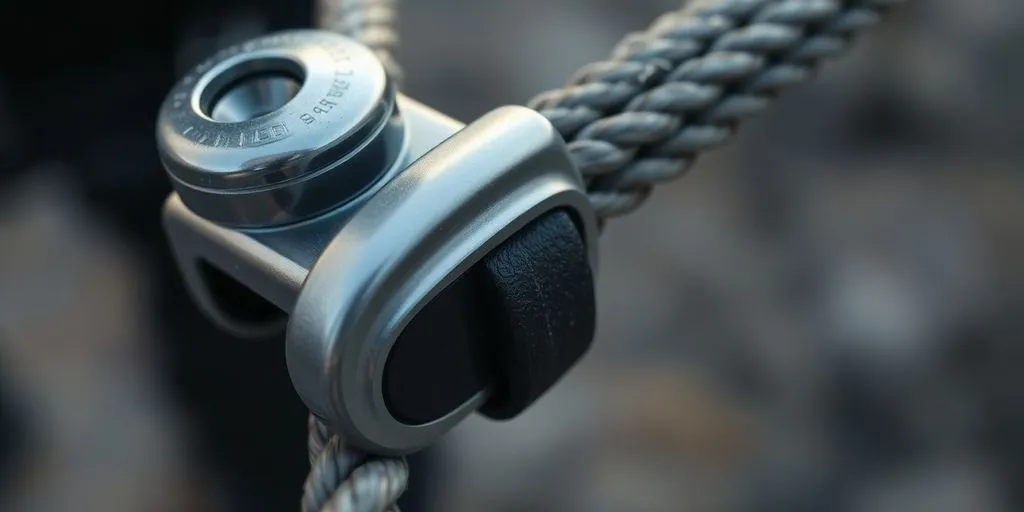
Ever wonder how people get to those hard-to-reach places, like the tops of oil rigs or inside huge airplane hangars? Well, forget those old-school ropes and pulleys. There’s a new tool making waves: the electric climbing ascender. It’s changing how folks work at heights, making things quicker, safer, and a lot less tiring.
This article will explore the origins of the electric climbing ascender, its capabilities, and its future direction.
The Evolution of the Electric Climbing Ascender
The story of the electric climbing ascender starts with DARPA. Initial funding helped kickstart the tech. Quoin, building on concepts of hot gas turbines, experimented with battery-powered motors. This experimentation led directly to the creation of the electric ascender. It’s a cool example of how military research can lead to civilian tech.
Quoin didn’t stop at just one type of ascender. They created air, gas, and electric versions of their PowerQuick Personal Lifting Devices. These devices offer a faster and safer alternative to manual climbing. What’s neat is that they move along a rope, unlike traditional winches.
Plus, they have a built-in clutch system for safety. Oil companies are looking at these for navigating oil rigs, and the Air Force is exploring their use in aircraft hangars.
Each type of ascender has its own strengths. The electric ascender for climbing is explosion-proof, making it safe for confined spaces. Quoin developed two versions: the PQ 300-1, weighing 14 lbs and lifting 320 lbs at 1.5 fps, and the PQ 500-1, weighing 11 lbs and lifting 500 lbs at 1 fps. Air-powered ascenders run on compressed air. The choice depends on the specific needs of the job.
Electric ascenders are gaining traction because they offer a balance of power, safety, and ease of use. They represent a significant step forward in lifting technology.
Key Features of the Electric Climbing Ascender
Safety is obviously a big deal. Each ascender has an integral clutching system. This is super important because it kicks in if the main mechanism or brake fails. It’s like a backup plan for your backup plan. We’re talking about serious peace of mind when you’re suspended high up.
Think about working in tight, risky spots. Our electric ascenders? They’re explosion-proof. This is a must-have for places like oil rigs or any confined space where sparks could be a problem. It’s about making sure the tool doesn’t become a hazard.
Okay, let’s talk numbers. We have a couple of versions. The PQ 300-1 weighs 14 lbs and can lift 320 lbs at a decent speed. Then there’s the PQ 500-1: it’s lighter at 11 lbs but can haul 500 lbs, though it’s a bit slower. Choosing the right one depends on what you’re lifting and how fast you need to go.
It’s all about finding the right balance between weight, lifting power, and speed. We want something that’s easy to carry but still packs a punch when it comes to getting the job done. It’s a trade-off, but we think we’ve nailed it.
Transforming Industrial Access with Electric Climbing Ascenders
We’re seeing electric climbing ascenders really change how industries approach access challenges. Forget the old ways; these devices are making things safer, faster, and more efficient. Let’s look at some specific examples.
Oil rigs are notoriously dangerous places to work. Traditional methods of access, like ropes and pulleys, can be slow and risky, especially in emergencies. Electric ascenders offer a much faster and safer alternative for workers needing to move around the rig.
- Faster emergency egress.
- Reduced risk of falls.
- Improved worker mobility.
Electric ascenders are being considered to replace conventional systems, especially for emergency situations. The ability to quickly evacuate personnel is a game-changer in an environment where every second counts.
Initially, you might think electric ascenders are more expensive, but when you factor in the long-term costs, they can actually save money. For example, a conventional rope climbing device system can cost around $27,000. Electric ascenders? Around $5,000. That’s a significant difference!
- Lower initial investment (in some cases).
- Reduced labor costs due to increased efficiency.
- Less maintenance compared to complex pulley systems.
Aircraft hangars present their own set of access problems. Scissor lifts take up a lot of space and require moving the planes. Electric ascenders offer a more flexible solution. They allow workers to quickly and safely reach high areas without disrupting operations. The versatility is a huge plus.
- No need to move aircraft.
- Faster access to rafters and other high areas.
- Reduced risk of damage to aircraft.
Military and Special Operations Applications

Imagine this: a team needs to quickly access a ship. Forget the grappling hooks and slow climbs. With electric climbing ascenders, naval operations get a serious speed boost. These devices allow personnel to rapidly board vessels, enhancing mission effectiveness and response times. It’s about getting there faster and safer. Think about the possibilities for surprise entries and quick extractions.
- Increased speed of boarding
- Reduced risk to personnel
- Enhanced tactical advantage
The Air Force faces unique challenges, especially when it comes to pilot rescue. Electric ascenders are changing the game. We’re talking about quicker extraction times from aircraft, reducing the risk of further injury to the pilot. Plus, they’re using these ascenders in training scenarios, preparing personnel for real-world emergencies. The power ascenders are a game changer for pilot safety.
The ability to swiftly and safely rescue pilots is paramount. Electric ascenders provide a reliable and efficient solution, minimizing the physical strain on rescue teams while maximizing the speed of extraction.
For Special Weapons and Tactics (SWAT) teams, every second counts. Electric ascenders offer a tactical edge in urban environments and complex structures. Imagine scaling buildings quickly and quietly, gaining access points that would otherwise be inaccessible. This tech isn’t just about climbing; it’s about gaining a strategic advantage.
- Improved access to elevated positions
- Enhanced surveillance capabilities
- Increased speed in tactical deployments
The Electric Climbing Ascender in Practice

Ascenders are built for one thing: going up. Descent? That’s a whole different ballgame. Most mechanical ascenders aren’t designed for controlled descent, meaning you’ll need a separate device for rappelling or lowering yourself. It’s like using a screwdriver to hammer a nail – technically possible, but definitely not ideal. This distinction is key for understanding how to effectively use these tools.
For tree climbers and those in work positioning, electric ascenders can be game changers. Think about it: you’re hauling gear, maneuvering around branches, and trying to maintain a stable position. An electric ascender can free up your hands and reduce fatigue.
Many climbers use ascenders to get into the tree, then tie and set their friction hitch once up there. It’s all about finding the right system for the job. Here are some things to consider:
- Weight of the ascender
- Lifting capacity
- Battery life
Not all ascenders are created equal. The best choice depends heavily on the task at hand. Are you navigating an oil rig, performing a rescue, or scaling a tree? Each scenario demands different features and capabilities. For example, Navy Seals might use the ascender to quickly board a vessel at sea. Consider these factors when making your selection:
- Weight and size
- Lifting speed
- Safety features
It’s important to match the ascender to the specific demands of the job. A lightweight, high-speed model might be perfect for rapid boarding, while a heavier, more powerful ascender could be necessary for lifting heavy equipment on an oil rig. Understanding these differences is crucial for safe and efficient operation. Don’t forget to check out the Axial AXP8 Gilamon for a durable option.
Advantages of the Electric Climbing Ascender
Let’s face it, manual climbing is slow and can be risky. With electric ascenders, we’re talking about a significant boost in speed. We can ascend much faster, reducing the time spent in potentially hazardous environments.
Plus, the built-in safety mechanisms give us peace of mind. It’s a game-changer for anyone who needs to get up high quickly and safely. Think about it: less time climbing means less exposure to risks like falls or fatigue. It’s a win-win.
One of the coolest things about electric ascenders is how adaptable they are. Whether we’re working on an oil rig, scaling a wind turbine, or even doing some tree work, these devices can handle it. They’re designed to work in all sorts of conditions, from tight spaces to wide-open areas. This versatility makes them a valuable tool for a wide range of industries. We’ve seen them used in:
- Construction sites
- Search and rescue operations
- Industrial maintenance
The ability to use the same equipment across different jobs saves us time and money. It also simplifies training and logistics, making our operations more efficient.
Climbing is hard work. It takes a toll on our bodies, especially when we’re doing it all day. Electric ascenders take a lot of the physical strain out of the equation. They do the heavy lifting for us, reducing fatigue and the risk of injuries. This means we can work longer and more comfortably.
It’s not just about making the job easier; it’s about protecting our long-term health and well-being. We can focus on the task at hand without worrying about wearing ourselves out. It’s a smart investment in our team’s health and productivity.
Future Prospects for Electric Climbing Ascender Technology

We’re always looking for ways to make things better, right? That’s where the future of electric climbing ascenders is headed. It’s not just about making them stronger; it’s about making them smarter, safer, and more versatile. Think lighter materials, more efficient motors, and maybe even AI-powered controls. The goal is to create lifting devices that can handle any situation, no matter how challenging.
Electric climbing ascenders are already making waves in industries like oil and gas, and even with the military. But we think this is just the beginning. As the technology improves and becomes more affordable, we’ll see even wider adoption across different sectors. Imagine construction workers using them to scale skyscrapers, or firefighters using them to quickly reach people in need. The possibilities are endless.
Electric climbing ascenders aren’t just standalone tools; they’re part of a bigger system. We envision a future where these devices are seamlessly integrated with other technologies, like drones, sensors, and data analytics platforms. This could lead to some pretty cool applications, like remote inspections of infrastructure, automated maintenance tasks, and even search and rescue operations.
We believe that electric climbing ascenders have the potential to revolutionize the way we work and explore. By continuing to innovate and expand their capabilities, we can unlock new possibilities and create a safer, more efficient future for everyone.
Wrapping Things Up
So, what’s the big takeaway here? Electric climbing ascenders are pretty cool, and they’re definitely changing how people get around in high places. We’ve seen how they started, kind of by accident, from some military stuff, and now they’re showing up everywhere.
From helping out in tricky industrial spots, like oil rigs, to making things safer for our Air Force folks, these devices are proving their worth. They’re not just for super specialized jobs anymore; they’re becoming a real option for all sorts of work that involves going up and down ropes.
It’s clear that this technology is only going to get better and more common, making vertical movement a lot easier and safer for everyone involved. Pretty neat, right?
Frequently Asked Questions
What does a climbing ascender do?
The electric climbing ascender is a tool that helps people climb up ropes more easily. It’s like a small, battery-powered machine that pulls you up, making climbing faster and less tiring than doing it by hand.
Where did the idea for electric climbing ascenders come from?
The idea for these ascenders came from a special government project (DARPA) that was looking into new ways to lift things. They started with gas and air-powered versions, and while testing those, they realized a battery-powered motor could also work really well, leading to the electric ascender we see today.
Can electric ascenders be used in dangerous places, like where explosions might happen?
Yes, absolutely! Some electric ascenders are built to be explosion-proof. This means they can be used safely in places where there might be flammable gases or dust, like inside certain industrial tanks or underground tunnels.