Hey there! So, you’re probably here because you’ve heard about this cool gadget called drill powered rope ascender, right? Maybe you’re into climbing, or you work at heights, or you just like knowing about neat tools. Whatever your reason, you’ve landed in the right spot.
This article is all about giving you the lowdown on the drill powered rope ascender. We’ll cover what it is, how it works, and why it might just be a game-changer for you. Stick around, it’s going to be a good one!
What is a Drill Powered Rope Ascender?
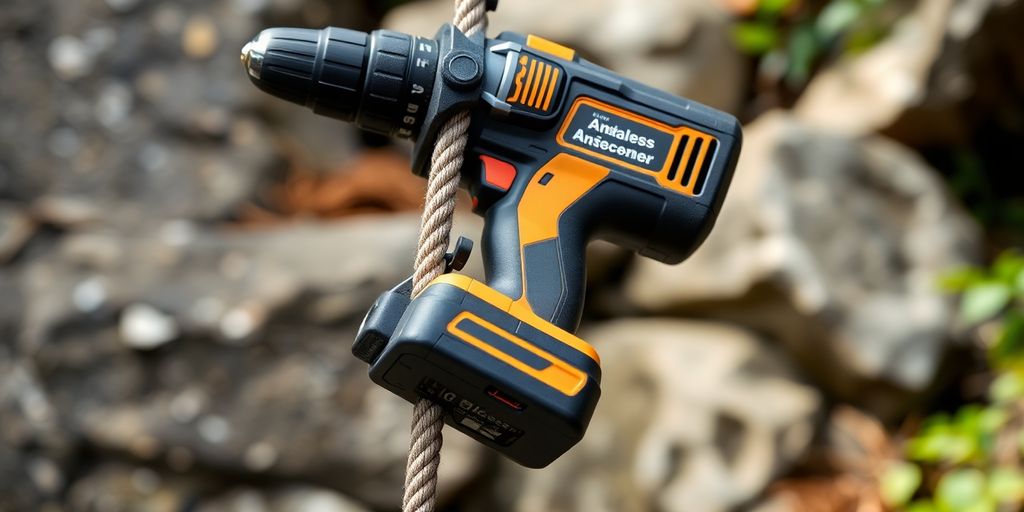
Okay, so what exactly is a drill powered rope ascender? Simply put, it’s a device that uses a standard power drill to help you climb ropes. Instead of relying solely on your muscles, the drill provides the power to move you upwards. Think of it as an electric elevator for ropes.
We’re not talking about replacing traditional climbing methods, but rather adding a tool to our arsenal for specific situations. It’s all about efficiency and accessibility, especially when dealing with long ascents or heavy loads.
Let’s break down what makes up a typical drill powered rope ascender. You’ve got a few key parts working together:
- The Ascender Unit: This is the core of the system, housing the mechanism that grips and moves along the rope.
- The Drill Interface: This connects the ascender to your power drill. It’s gotta be sturdy and reliable.
- The Rope Gripping Mechanism: This is what actually grabs the rope. It needs to be gentle enough not to damage the rope, but strong enough to hold your weight. Regular inspections are important for rope ascending techniques.
- Safety Features: Things like overload clutches or backup systems are crucial for preventing accidents.
How a Drill Powered Rope Ascender Works?
Alright, let’s get into the nitty-gritty of how these things actually work. The basic principle is pretty straightforward: the drill spins a mechanism within the ascender, which in turn pulls the rope through the device.
- Attach the ascender to the rope.
- Connect your drill to the ascender’s interface.
- Engage the drill, and the internal mechanism grips the rope.
- As the drill spins, the ascender moves up the rope, pulling you along with it.
It’s important to remember that these devices are not designed for dynamic loading (like falls). They’re meant for controlled ascents. Always use appropriate safety measures and backup systems.
It’s a game changer for certain applications, making rope work way less strenuous. The power ascender is a great tool to have.
Benefits of Using a Drill Powered Rope Ascender

Let’s face it, climbing ropes can be tiring. With a drill powered rope ascender, we can kiss goodbye to endless pulling and straining. These devices significantly speed up the ascent process, allowing us to cover more ground with less effort. Think of it as power steering for climbing!
We can focus on the task at hand, whether it’s inspecting a tower or exploring a cave, instead of battling the rope. It’s a game-changer for efficiency.
One of the biggest advantages is the reduction in physical strain. We’re not getting any younger, and our bodies will thank us for using a drill powered ascender. Repetitive motions and heavy lifting can lead to fatigue and injuries. This tool takes the load off our muscles, making longer climbs more manageable and enjoyable.
It’s especially helpful for those of us who aren’t professional athletes but still love a good climb. It allows us to conserve energy for other tasks, like setting up equipment or taking photos of the amazing views.
Safety is paramount, and drill powered rope ascenders often come with features that enhance our security. Many models include dual-locking systems and overload protection, giving us peace of mind as we ascend.
These features help prevent accidental slippage and ensure that the device operates within safe load limits. Regular inspections are still crucial, but the added safety measures provide an extra layer of protection. We always double-check everything before starting our ascent, but it’s nice to know that the ascender has our back.
Here’s a quick look at some common safety features:
- Automatic braking: Stops the ascent immediately if the drill loses power.
- Overload protection: Prevents the device from operating beyond its safe load limit.
- Redundant locking mechanisms: Ensures a secure grip on the rope even if one system fails.
Choosing the Right Drill Powered Rope Ascender

Okay, so you’re thinking about getting a drill powered rope ascender? Smart move! But before you jump in, let’s talk about what to look for. It’s not just about grabbing the shiniest one off the shelf. We need to think about your needs.
- Weight Capacity: This is huge. Make sure the ascender can handle your weight plus any gear you’re carrying. Don’t skimp on this – safety first!
- Rope Compatibility: Not all ropes are created equal, and neither are ascenders. Check what diameter ropes the ascender is designed for. Using the wrong rope can lead to slippage or, worse, failure.
- Drill Compatibility: This is a drill powered ascender, after all. Ensure your drill has the right voltage and torque. Some ascenders might require specific drill types or adapters.
Think about where you’ll be using it most. Are you doing recreational climbing, industrial work, or rescue operations? The environment and frequency of use will heavily influence your choice.
This is where things get technical, but stick with me. Rope and drill compatibility is absolutely critical. We’re talking about your safety here.
- Rope Diameter: As mentioned before, match the rope diameter to the ascender’s specifications. Too thin, and it might slip. Too thick, and it might not fit properly.
- Rope Material: Different ropes have different properties. Some ascenders are designed for specific rope materials like nylon or polyester.
- Drill Voltage and Torque: The ascender needs enough power to operate effectively. Check the manufacturer’s recommendations for drill voltage and torque. A weak drill will struggle, while an overpowered drill could damage the ascender or the rope.
Consider the CMC Ascender, a rope grab that utilizes a spring-loaded cam to facilitate progression on life safety rope.
Proper Setup and Operation of Your Drill Powered Rope Ascender
Alright, let’s get this show on the road. First things first, unpack everything and lay it out. Make sure you’ve got all the parts: the ascender unit, the drill adapter, any safety straps, and the instructions (yes, read them!).
- Attach the drill adapter to your drill. Make sure it’s snug. We don’t want any slippage mid-climb.
- Connect the drill (with adapter) to the ascender unit. This usually involves sliding it into a designated slot and securing it with a pin or clamp. Double-check that it’s locked in place.
- Thread the rope through the ascender. Follow the arrows or diagrams on the unit. Incorrect threading can lead to disaster. Ensure the rope is properly seated in the gripping mechanism.
- Attach any safety tethers or slings. These are your backups. Connect them to your harness. Think of it as a rappel backup.
Okay, now for the important stuff. Safety first, always. Here’s how we keep things smooth and, more importantly, safe:
- Always perform a pre-climb check. Inspect the ascender, the rope, the drill adapter, and your safety gear. Look for wear, tear, or anything that seems off.
- Use a safety line. Seriously, don’t skip this. A separate line with a backup ascender is your insurance policy.
- Never exceed the load limit. Know the weight capacity of your ascender and stay within it.
- Control the drill speed. Start slow and get a feel for how the ascender responds. Jerky movements are a no-go.
- Keep your hands clear of moving parts. Obvious, but worth repeating. We don’t want any pinched fingers.
Operating a drill powered ascender requires focus and respect for the equipment. Never rush, and always prioritize safety. A moment of carelessness can lead to serious consequences.
Want your ascender to last? Treat it right. Here’s the lowdown on keeping it in tip-top shape:
- Clean it after each use. Wipe down the ascender to remove dirt, grime, and rope fibers. A clean ascender is a happy ascender.
- Lubricate moving parts. Use a dry lubricant to keep things running smoothly. Avoid oil-based lubricants, as they can attract dirt.
- Store it properly. Keep it in a dry, cool place away from direct sunlight. UV rays can degrade the materials over time.
- Regularly inspect for wear and tear. Check the gripping mechanism, the drill adapter, and any other critical components. Replace worn parts immediately. Consider the AWah Z3 Fire for its durability.
Advanced Techniques for Drill Powered Rope Ascender Use
When we’re tackling vertical or near-vertical climbs, a drill-powered ascender can be a game-changer. It’s not just about pointing and going, though. We need to think about efficiency and safety. Adjusting the angle of attack can significantly reduce strain on both the rope and the drill itself.
- Use a secondary rope for safety.
- Consider using a pulley system to reduce the load.
- Practice on easier terrain first.
Maintaining a steady pace is key. Avoid jerky movements that could cause slippage or damage to your equipment. Smooth and controlled operation will extend the life of your ascender and keep you safe.
Rope slack is the enemy. It wastes energy and increases the risk of a fall. We’ve found a few tricks that help us keep things tight. One method involves using a self-locking descender in conjunction with the ascender.
This allows us to take up slack as we go, preventing any unwanted surprises. Another option is to have a partner manage the rope from below, but communication is key here.
- Use a self-locking descender.
- Communicate with your partner.
- Consider pre-tensioning the rope.
The drill-powered ascender doesn’t exist in a vacuum. It needs to play nice with our other gear. Think about how it interacts with your harness, your safety lines, and any other tools you’re using. For example, using a chest harness can help keep the rope aligned and prevent the ascender from twisting.
Also, always double-check that all connections are secure before starting your ascent. We like to use locking carabiners for everything, just to be safe.
- Use a chest harness.
- Double-check all connections.
- Consider using locking carabiners.
Safety Considerations for Drill Powered Rope Ascenders
When using a drill powered rope ascender, understanding the load limits is paramount. Exceeding these limits can lead to catastrophic failure. We need to know the maximum weight the ascender, rope, and drill can handle. These limits are usually specified by the manufacturer. It’s not just about the weight of the person, but also any gear being carried.
Shear points are where the ascender is most likely to fail under excessive load. Mechanical ascenders, for example, might shear off the rope’s sheath at around 5 kN (1,124 lbs). Knowing these weak points helps us avoid situations that could lead to failure.
Regular inspections are non-negotiable. Before each use, we should meticulously check:
- The ascender for any signs of wear, cracks, or deformation.
- The rope for cuts, abrasions, or damage from heat or chemicals.
- The drill for proper function and secure attachment.
A small issue overlooked can quickly turn into a big problem when you’re suspended high off the ground. We should establish a routine inspection process and stick to it religiously.
Even with the best equipment and precautions, things can go wrong. We need to have emergency procedures in place. This includes:
- Having a backup system, such as a rappel backup, in case the ascender fails.
- Knowing how to descend safely if the drill malfunctions or the rope gets stuck.
- Carrying a communication device to call for help if needed.
It’s also important to practice these procedures regularly. Familiarity with emergency protocols can make all the difference in a critical situation. We should also be aware of the minimum setting depth for mechanical bolts, as advised by safety research departments.
Applications of the Drill Powered Rope Ascender

- Recreational Climbing and Caving
For us recreational climbers and cavers, the drill powered rope ascender opens up a whole new world of possibilities. Imagine tackling longer routes with less fatigue, or exploring deeper into caves without the usual physical strain. We can cover more ground and enjoy the experience more fully. It’s not just about speed; it’s about conserving energy for the fun parts. Think about it: more time enjoying the view, less time struggling with ascension.
- Industrial and Rescue Operations
In industrial and rescue scenarios, time is often of the essence. Drill powered ascenders can significantly speed up operations, allowing workers to reach elevated positions quickly and safely. For rescue teams, this can mean the difference between life and death. We’ve seen these tools used for:
- Tower maintenance
- Wind turbine repairs
- Search and rescue missions
The ability to rapidly ascend ropes in these situations is invaluable. It reduces the risk to both the workers and those being rescued. The efficiency gains translate directly into improved outcomes.
- Unique Uses and Adaptations
The versatility of drill powered rope ascenders extends beyond the typical climbing and industrial applications. We’re constantly discovering new and innovative uses. For example, some researchers are using them to access remote areas for environmental studies. Others are adapting them for use in tree care and arboriculture. The possibilities are endless. Consider these less common, but equally important applications:
- Arborist work
- Wildlife research
- Film and photography in challenging environments
And don’t forget the DIY enthusiasts who are always finding new ways to pre-clipping ropes and adapting these tools for their own unique projects. It’s exciting to see how the community continues to push the boundaries of what’s possible.
We’ve gone through a lot about drill-powered rope ascenders. It’s pretty clear these things can be super handy for getting up ropes, whether you’re working high up or just exploring. Remember, though, it’s not just about having the right gear. You also need to know how to use it safely.
Always practice, understand your equipment, and make sure everything is in good shape before you start. Staying safe is the main thing. With a bit of practice and the right setup, you’ll be zipping up ropes like a pro in no time.
Frequently Asked Questions
What exactly is a drill-powered rope ascender?
A drill-powered rope ascender is a special tool that helps you climb ropes using the power from a regular drill. It makes going up a rope much easier and faster than climbing by hand.
How does this tool actually lift someone up a rope?
These devices work by grabbing onto the rope with a special part called a cam. The drill then spins a gear that pulls the rope through the device, lifting you up. It’s like a mini elevator for ropes!
What are the main benefits of using one of these?
Using a drill-powered ascender saves your energy, letting you climb longer without getting tired. It’s also much quicker than traditional climbing methods, and many models have safety features built in.
Where can I use a drill-powered rope ascender?
These ascenders are great for things like tree climbing, exploring caves, or even for rescue workers. Basically, anywhere you need to go up a rope quickly and safely, this tool can help.


