
Ever wonder how climbers get up those super tall ropes? Or how rescue teams pull people to safety? A lot of times, the answer is a climbing rope ascender. This cool piece of gear lets you go up a rope without slipping back down.
It’s pretty simple but also super important for anyone who works or plays on ropes. We’re going to check out everything about the climbing rope ascender, from what it is to how to keep it working right.
Understanding the Climbing Rope Ascender
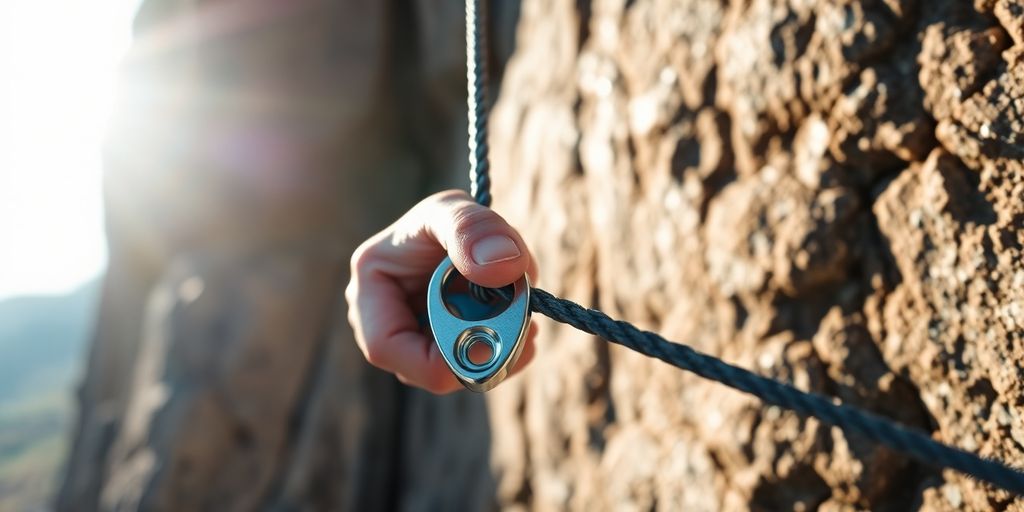
Okay, so what are these things? Mechanical ascenders are basically tools that let us move up a rope without having to rely solely on our upper body strength. Think of them as a ratchet for ropes. They grip the rope when you pull down and slide up when you release. They’re super useful in all sorts of situations.
It’s all about the grip! Ascenders use a cam or other mechanism to grab the rope when weighted. When you lift the ascender, the cam releases, allowing it to slide freely. The magic is in the unidirectional movement. Here’s the basic rundown:
- Attach the ascender to the rope.
- Apply weight (pull down).
- The cam engages, gripping the rope.
- Lift the ascender to slide it up.
The beauty of a rope ascender lies in its simplicity. It transforms a static rope into a personal elevator, making vertical ascents far less taxing.
Key Components of a Climbing Rope Ascender
Let’s break down what makes these things tick. You’ll usually find these parts:
- Frame: The main body, usually made of aluminium or steel.
- Cam: The gripping mechanism. This is the heart of the ascender.
- Handle/Grip: Where you put your hand (or foot!).
- Attachment Point: A hole or loop for connecting to your harness. Knowing these parts helps when you’re doing routine inspection protocols and maintenance.
Types of Climbing Ascenders
Handheld Ascenders for Vertical Progress
Handheld ascenders are probably what come to mind when you think of climbing ascenders. These are designed to be operated with one or both hands, and they’re your main tool for moving up a rope. We use them by attaching them to the rope, sliding them up, and then weighting them to engage the camming mechanism. It’s a pretty straightforward process, but practice makes perfect.
Chest Ascenders for Efficiency
Chest ascenders are all about making things smoother. We clip these to our harness, and they help keep the rope running straight and taut as we ascend. This reduces friction and makes the whole process more efficient. Think of it as cruise control for your vertical climb.
They work best when paired with hand ascenders, creating a coordinated system. It’s like having a buddy who’s always got your back, making each upward movement a little easier. They are a great addition to your climbing equipment.
Foot Ascenders for Enhanced Movement
Foot ascenders? These are game-changers. They attach to our boots and let us use our legs to push ourselves up the rope. This is huge because it frees up our hands and distributes the workload more evenly. It’s like adding another gear to your climbing engine.
We find that using foot ascenders makes longer ascents way less tiring. Plus, it opens up some cool techniques for navigating tricky sections. Here’s why we love them:
- Hands-free operation for certain tasks
- Improved efficiency on long climbs
- Better body positioning and balance
Specialized Ascenders for Rescue Operations
When things get serious, specialized ascenders come into play. These are designed for the unique demands of rescue scenarios, where speed and reliability are critical. They often feature enhanced safety mechanisms and the ability to handle heavier loads. We rely on these in situations where there’s no room for error. They might include features like:
- Auto-locking mechanisms
- Increased load capacity
- Compatibility with various rope sizes
In rescue situations, having the right gear can make all the difference. Specialized ascenders are a key part of that equation, giving us the tools we need to perform safely and effectively.
Applications of the Climbing Rope Ascender
We’ve all been there, staring up at a seemingly endless rope. Ascenders make it way easier. They let us move up fixed ropes without killing our arms. Think of it: jugging up big walls becomes less of a suffer-fest. It’s not just for aid climbing, either. We use them for setting up top ropes or cleaning routes on steep terrain. It’s about efficiency and saving energy for the actual climbing.
Hauling Systems in Rescue Scenarios
In rescue situations, every second counts. Ascenders are vital in hauling systems. They provide a secure grip on the rope, allowing rescuers to lift injured climbers or equipment. We use them to create mechanical advantage, turning a difficult task into a manageable one. It’s not just about strength; it’s about smarts and using the right tools to aid in rescue.
Progress Capture in Technical Rigging
Technical rigging involves complex systems and precise movements. A rope ascender acts as a progress capture device, preventing slippage and maintaining tension. We use them when setting up zip lines, creating high lines, or managing loads in industrial settings. It’s about ensuring safety and stability in demanding environments.
Industrial and Arborist Use Cases
Beyond climbing and rescue, the rope ascender finds applications in various industrial and arborist settings. Window washers, tower maintenance workers, and arborists rely on ascenders to access and work on tall structures. We use them for positioning, fall protection, and efficient movement in challenging environments. It’s about getting the job done safely and effectively.
Advantages of Mechanical Ascenders
Mechanical ascenders offer several advantages over Prusik knots. They generally provide a more secure and efficient grip on the rope, reducing slippage and increasing the speed of ascent. We find that mechanical ascenders are easier to use, especially for extended periods, as they require less physical effort than manipulating Prusik knots. Plus, they’re often more durable and resistant to wear and tear.
Limitations of Prusik Knots
Prusik knots, while versatile, have limitations. They can be prone to slippage, especially on icy or wet ropes. Tying and untying Prusiks can be time-consuming, and they require a good understanding of knot tying. Friction from the knot can also damage the rope over time. We’ve all been there, fighting with a stubborn Prusik when we just want to get moving.
Situational Selection for Ascending Devices
Choosing between mechanical ascenders and Prusik knots depends on the situation. For long ascents or heavy loads, mechanical ascenders are usually the better choice. Prusiks are useful in emergency situations or when a lightweight, versatile option is needed. Consider the rope diameter, environmental conditions, and your personal experience when making your decision. For example, using a HollowBlock for a friction hitch is easier to slide than a prusik hitch.
Safety Considerations for Each Method
Safety is paramount when using either method. Always inspect your equipment before each use. With mechanical ascenders, ensure the device is properly attached to the rope and that the locking mechanism is engaged. With Prusiks, use the correct cord diameter and number of wraps for your rope.
Never fully trust any single piece of equipment. Always use a backup system, such as a second ascender or a safety knot, to protect against failure. Regular practice and familiarity with both methods are crucial for safe and efficient climbing.
Advanced Techniques with Climbing Ascenders
The Rope Ascender shine when you add it to hauling systems. They let you efficiently lift heavy loads by providing a secure point to pull from. We often use them in rescue scenarios or when moving gear up a cliff. It’s all about creating a mechanical advantage, and ascenders are key to making that happen. Think of it like this: you’re not just climbing; you’re building a system to make the work easier.
Managing Knots with Ascender Systems
Knots can be a real pain when you’re using ascenders. They can jam up the system and stop you in your tracks. We’ve learned that careful planning and knot selection are super important. Here’s what we usually do:
- Use knots that are easy to pass with ascenders.
- Keep the system clean and organized to avoid snags.
- Practice knot management techniques regularly.
Dealing with knots efficiently keeps the whole operation smooth and safe. It’s one of those skills that separates the experienced climbers from the newbies.
Tandem Ascender Setups
Tandem ascender setups can seriously boost your efficiency. Using two ascenders allows for a smoother, faster climb. We often use a chest ascender in combination with a hand ascender. This setup lets us maintain continuous contact with the rope, reducing the risk of slips and making the whole process way more comfortable. It’s like having a second set of hands helping you out.
Powered Ascenders for Enhanced Performance
Powered rope ascender is a game-changer, especially for long ascents or heavy loads. These motorized devices take a lot of the physical strain out of climbing. We’ve been experimenting with the Skylotec ActSafe ACX Power Ascender, and here’s what we’ve found:
- Electric drive systems make ascents faster and easier.
- Variable speed control lets you adjust to different conditions.
- Safety features like emergency stops are crucial.
A powered rope ascender isn’t just for fun; it’s a genuine tool for professionals who need to complete tasks quickly and safely. They are even certified as lifting equipment when used with an ELR (Equipment Lifting Rope).
Maintenance and Care for Your Climbing Rope Ascender
Okay, so you’ve got your rope ascender. Now what? Don’t just toss it in your gear bag and forget about it! Regular checks are key. Before each use, give your ascender a good once-over. Look for anything that seems off – cracks, bends, or excessive wear. Pay special attention to the cam and teeth; these are the parts that grip the rope and are most prone to wear.
Make sure all moving parts move freely. If something feels sticky or jammed, don’t use it until you figure out what’s going on. It’s like checking your tires before a road trip – a little time spent now can save you a lot of trouble later. Here’s a quick checklist:
- Check the frame for cracks or deformation.
- Inspect the cam for wear and sharpness.
- Verify that all springs are intact and functioning.
Cleaning and Storage Best Practices
Grime is the enemy! Dirt, mud, and even just regular old dust can mess with your ascender’s performance. After each use, wipe it down with a clean, dry cloth. If it’s really dirty, you can use a mild soap and water solution, but make sure to rinse it thoroughly and let it dry completely before storing it.
Avoid using harsh chemicals or solvents, as these can damage the materials. When it comes to storage, keep your rope ascender in a cool, dry place away from direct sunlight and extreme temperatures. A gear bag or storage container works great. Don’t just throw it in a pile with all your other stuff – treat it with respect, and it’ll treat you well in return. Think of it like this:
- Wipe down after each use.
- Use mild soap and water for heavy dirt.
- Store in a cool, dry place.
Recognizing Wear and Tear
Nothing lasts forever, and that includes your rope ascender. Knowing when to retire a piece of gear is crucial for safety. Keep an eye out for signs of wear and tear, such as:
- Excessive wear on the cam teeth.
- Cracks or deformation in the frame.
- Corrosion or rust.
If you notice any of these, it’s time to replace your rope ascender. Don’t risk it – your safety is worth more than saving a few bucks. Also, consider the amount of use. A heavily used ascender will wear out faster than one that’s only used occasionally. If you’re unsure, consult with a qualified professional or the manufacturer. They can help you assess the condition of your rope ascender and determine if it’s still safe to use. Remember, when in doubt, throw it out!
Extending the Lifespan of Your Device
Want to get the most out of your rope ascender? Here are a few tips to help extend its lifespan. First, use it properly. Don’t overload it or subject it to unnecessary stress. Second, avoid using it on dirty or abrasive ropes. This can accelerate wear on the cam teeth. Third, lubricate the moving parts periodically with a silicone-based lubricant.
This will help keep them moving smoothly and prevent corrosion. Finally, store it properly when not in use. By following these simple tips, you can help keep your rope ascender in good condition for years to come. Consider these points:
- Use the rope ascender as intended.
- Keep ropes clean to reduce wear.
- Lubricate moving parts regularly.
Taking good care of your climbing rope ascender is not just about keeping it clean; it’s about ensuring your safety on the ropes. Regular maintenance and careful storage can significantly extend the life of your equipment and give you peace of mind when you’re high off the ground. Remember, a well-maintained ascender is a reliable partner in your climbing adventures. Don’t forget to check out the Rope Runner Pro for a top-tier climbing experience.
Wrapping It Up
So, that’s the deal with climbing ascenders. They really are a big deal for anyone who spends time on ropes, whether you’re just starting out or you’ve been doing this for ages. Picking the right one, knowing how to use it, and keeping it in good shape? That stuff makes a huge difference. It’s not just about getting up the rope; it’s about doing it safely and feeling good about it. So, take what you learned here, practice a bunch, and get out there and climb. Stay safe, and have fun out there!
Frequently Asked Questions
What exactly is a climbing rope ascender?
A climbing rope ascender is a special tool that lets you go up a rope but stops you from sliding back down. It’s super helpful for climbers and rescuers because it grips the rope tightly when you put weight on it, but you can slide it up easily.
What are the main uses for a climbing rope ascender?
You can use ascenders for many things, like climbing up fixed ropes, setting up systems to pull heavy things in rescues, or making sure a rope doesn’t slip when you’re working high up. They’re also used by tree workers and people who work on tall buildings.
What’s the difference between a mechanical rope ascender and a Prusik knot?
Mechanical ascenders are usually faster and easier to use than Prusik knots, especially for long climbs. Prusik knots are simple rope loops that can grip a rope, but they can be slower to adjust and might not work as well in all conditions. Each has its place depending on the situation.
How do I keep my climbing rope ascender in good condition?
To keep your ascender in good shape, always check it before and after each use for any damage or wear. Keep it clean from dirt and mud, and store it in a dry place. If you see cracks, bends, or worn-out parts, it’s time to replace it to stay safe.


