
Getting into climbing can be a lot of fun, but it’s also super important to know your stuff, especially when you’re dealing with ropes. This article is all about using an ascender rope safely and effectively. We’ll go over how these systems work, the different types you might see, and what gear you’ll need.
Plus, we’ll talk about how to actually use an ascender rope and, most importantly, how to stay safe out there. Think of this as your friendly guide to mastering the ascender rope so you can climb with more confidence.
Understanding Ascender Rope Systems
Ascender rope systems are the backbone of efficient and safe vertical movement in climbing. We’re going to break down the core concepts, emphasizing why redundancy is so necessary and why relying on a single ascender rope is generally a bad idea. Let’s get into it.
Self-belay systems are setups where a climber ascends a rope independently, without a belayer at the other end. These systems require careful consideration and a solid understanding of the equipment and techniques involved. It’s all about managing your own safety as you move upwards. We need to make sure that we have the right ascender rope systems in place.
Redundancy is key in any climbing system, but it’s especially critical when using ascender ropes. Think of it as a backup plan for your backup plan. If one component fails, the other is there to catch you.
Here’s why we prioritize redundancy:
- Minimizes the risk of complete system failure.
- Provides a safety net in case of equipment malfunction.
- Allows for continued ascent even if one ascender becomes compromised.
Redundancy isn’t just about having two of everything; it’s about ensuring that the two systems are independent. This means that a failure in one system shouldn’t cause a failure in the other. For example, using two different types of ascenders can prevent a single point of failure due to a design flaw or user error common to both.
Why a Single Ascender Rope System is Not Recommended
While technically feasible, using a single ascender rope system is generally discouraged due to the inherent risks. The biggest issue is the lack of redundancy. If something goes wrong with your single rope or ascender, you’re in a very precarious situation.
Consider these points:
- Increased risk of rope damage leading to failure.
- No backup in case of an ascender malfunction.
- Higher potential for a serious fall if the system fails.
Using a single rope means you’re putting all your eggs in one basket. It might seem lighter and more straightforward, but the increased risk isn’t worth it. Always prioritize safety by using a redundant system, even if it means carrying a bit more gear.
Types of Ascender Rope Configurations
- Dual Rope Ascender Systems
When considering ascender rope setups, the dual rope system is often the first option that comes to mind. This involves using two separate ropes, each with its own ascender device. One of the significant advantages? If one rope gets damaged, you’ve got a backup. Plus, it can be more comfortable since you don’t always need shoulder straps. Here’s a quick rundown:
- Better protection against rope damage.
- Comfortable; often eliminates the need for shoulder straps.
- Easier to switch between ascent and descent.
However, it does mean carrying twice as much rope, and you’ve got to be extra careful with carabiner placement. We need to pay attention to the power ascenders we use.
- Single Rope Ascender Systems
Now, let’s discuss single-rope systems. With this setup, you’re using two ascenders on just one rope. The main advantage here is weight savings, especially on long climbs. It also reduces rope drag. But, and this is a big but, you’re relying entirely on that single rope. If it gets damaged, you’re in a tough spot. Here’s what we need to consider:
- Lighter weight for longer climbs.
- Less rope drag.
- Requires shoulder straps to tow the upper ascender properly.
Redundancy is only achieved with respect to the ascenders themselves. Rope installation must be perfect, with no rope friction, a quality anchor, and no exposure to rockfall.
Advantages and Disadvantages of Each Ascender Rope Setup
Choosing between dual and single rope ascender systems really boils down to balancing risk and reward. Dual rope systems offer better redundancy but add weight and complexity. Single rope systems are lighter but leave you more vulnerable to rope damage. Here’s a quick comparison:
| Feature | Dual Rope System | Single Rope System |
|---|---|---|
| Redundancy | High | Low |
| Weight | Higher | Lower |
| Complexity | More complex | Simpler |
| Best Use Cases | Situations where safety is paramount | Long climbs where weight is a major concern |
Ultimately, the best choice depends on the specific climb and our personal risk tolerance. We must always carefully assess the situation and choose the setup that best suits our needs.
Mastering Ascender Rope Techniques

Setting up your ascender rope system correctly is extremely important. We need to make sure the rope runs smoothly, minimizing friction. A sound installation is key to both safety and ease of movement. It’s worth taking the time to get it right. Double-checking every connection is a must before we even think about starting to climb.
Okay, so we’ve got our system installed. Now, how do we actually move up the rope without wasting a ton of energy? It’s all about rhythm and using our legs as much as possible.
Think about it like this: we’re trying to mimic climbing a ladder, but with a mechanical rope ascender. Short, controlled movements are way better than big, jerky ones. We want to conserve energy, especially on longer climbs.
Sometimes, we need to switch from ascending to descending, or maybe even to a belay. Knowing how to do this smoothly is crucial. We don’t want to be fumbling around, especially in a tricky spot.
Practice these transitions on the ground first, so we’re not learning on the fly when we’re high up. It’s all about having a plan and knowing our gear inside and out.
Mastering ascender rope techniques requires specific training. Work with a professional to confirm your ability to perform these techniques safely and independently before attempting them unsupervised. We provide examples of techniques related to your activity. There may be others that we do not describe here.
Safety Protocols for Ascender Rope Climbing
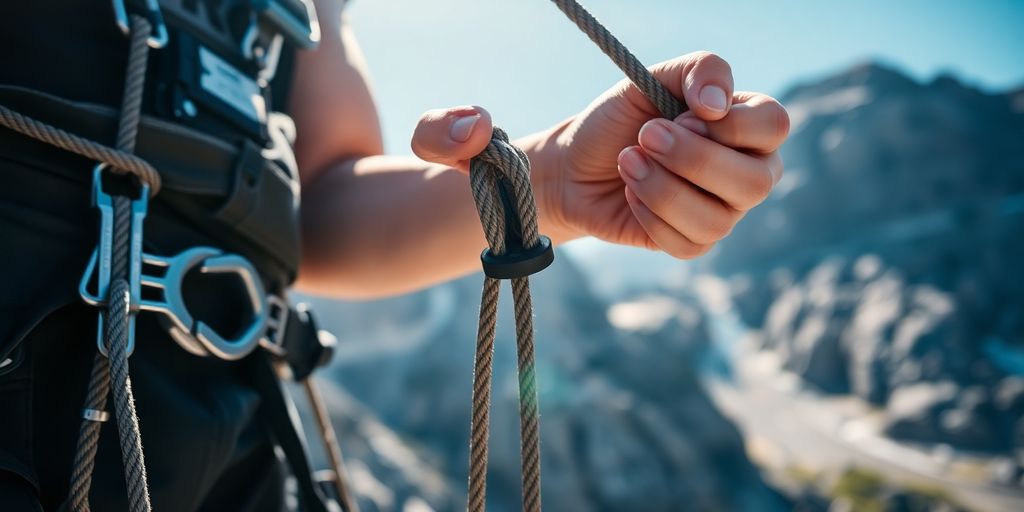
Let’s discuss keeping things safe when setting up our ascender ropes. It’s easy to get excited and rush, but that’s when mistakes happen. The setup is the foundation of everything, so we need to get it right.
- First, be cautious of falling when accessing the anchor from above. Seriously, that’s a common one.
- Rockfall is another biggie, especially when you’re moving the rope around. Keep an eye out, and maybe yell “Rock!” if you see something coming.
- Make sure your anchor is solid. Like, really solid. Use two points if you can, and equalize them. And for goodness’ sake, keep the rope away from sharp edges. A rope protector can be a lifesaver here.
- Watch out for passing the belay anchor and taking a factor 2 fall. Always stay below the belay anchor. Make sure your setup allows for this during access and egress.
- Even with a perfect setup, you can still deck if you fall in the first few meters. Ropes stretch, remember? Be extra careful near the ground.
Setting up your ascender rope system is like building the foundation of a house. If the foundation is weak, the whole structure is at risk. Take your time, double-check everything, and don’t be afraid to ask for help if you’re unsure about something.
Addressing Handling-Related Ascender Rope Dangers
So, you’ve got your ropes set up, and you’re ready to climb. Awesome! But don’t let your guard down. There are still plenty of ways things can go wrong while you’re actually using the system.
- Device failure is a real possibility. Ensure that everything is attached correctly and that nothing is obstructing the camera.
- Dropping a device when switching from ascent to descent is surprisingly common. Be extra careful when you’re making that change.
- Don’t detach yourself entirely from the rope while you’re doing maneuvers. A slight overhang can swing the rope out of reach.
- Slack rope is a sneaky one. If the rope isn’t weighted enough, it won’t slide fast enough, and you’ll end up with slack between you and the anchor. That means a longer fall if something goes wrong.
Fall factors are super important to understand, especially when you’re using ascender ropes. It’s all about how much you could potentially fall compared to the amount of rope that’s out. A higher fall factor means a bigger impact on your gear and your body.
- Fall Factor 0: This is basically a static situation. You’re not going to fall very far, if at all.
- Fall Factor 1: You could fall the same distance as the amount of rope between you and your last anchor point.
- Fall Factor 2: This is the worst-case scenario. You could fall twice the distance of the rope between you and your last anchor. This puts a huge strain on your gear and can cause serious injury.
| Fall Factor | Potential Impact | Risk Level |
|---|---|---|
| 0 | Low | Minimal |
| 1 | Moderate | Elevated |
| 2 | High | Critical |
When using ascender ropes, we need to minimize the potential fall factor. This means keeping our anchor points close together and being extra careful when we’re moving around. Always be aware of the potential fall distance and take steps to reduce it.
Advanced Ascender Rope Considerations

Okay, so overhangs and traverses? They’re the puzzles of the vertical world when you’re using ascenders. It’s not just a straight shot up anymore. We need to think about how to keep things smooth and, most importantly, safe. The key is managing your rope and maintaining a stable body position.
- Use directional placements to guide the rope.
- Consider using a mini-traxion to reduce rope drag.
- Practice these maneuvers close to the ground before committing to a big wall.
Overhangs can cause your ascender to bind, making upward progress difficult. Traverses introduce lateral movement, which can create slack in your system. Always anticipate these challenges and adjust your technique accordingly.
Terrain changes everything, right? What works on a clean, vertical wall might be a nightmare on a slab or a chimney. We need to be adaptable. It’s about reading the rock and adjusting our ascender setup and movement to match. Think about friction, rope angles, and how your gear interacts with the rock. Adaptability is key here.
- Slabs might require longer tethers to maintain efficiency.
- Chimneys might need you to switch to a different ascender setup altogether.
- Continually assess the terrain before committing to a pitch.
Continuous belay is like the holy grail of solo climbing. The idea is that you’re always protected, even while you’re moving your ascenders. It adds a layer of security, especially on exposed or tricky sections.
It’s not foolproof, but it’s a smart way to minimize risk. Maintaining a continuous belay involves using a combination of fixed lines and self-belay devices.
- Use a redundant belay system with two ascenders.
- Consider using a micro-traction for progress capture.
- Always test your system before thoroughly weighing it.
Maintaining Your Ascender Rope Gear
Regular checks are vital. Look for cuts, abrasions, or unusual stiffness. Pay close attention to areas that experience the most friction. If we spot anything questionable, it’s better to retire the gear than risk it. Keep a log of usage and inspections; it helps us track the lifespan of our equipment.
How we store our gear matters. Store ascenders in a cool, dry place, away from direct sunlight and chemical exposure. A gear bag works wonders for keeping everything organized and protected. Ensure devices are clean before storing them; dirt and grime can accelerate wear and tear.
Proper use and care go a long way. Avoid unnecessary abrasion and impact. Clean ropes and devices regularly, following the manufacturer’s instructions.
Consider these points to extend the life of your ascender rope gear:
Use rope protectors in areas prone to abrasion.
Avoid stepping on ropes.
Store ropes in a rope bag to keep them clean and protected.
Wrapping It Up
So, there you have it. Ascender ropes are a significant asset for climbers, and knowing how to use them effectively is crucial. We covered a wide range of topics, from selecting the right gear to using it safely.
Remember, practice makes perfect, and always double-check your setup. Climbing is awesome, but it’s even better when you’re doing it smart and safe. Stay safe out there, and happy climbing!
Frequently Asked Questions
What are ascender rope systems?
Ascender rope systems assist climbers in ascending a fixed rope. They use special tools that grip the rope, letting you move upwards while staying safe.
Why is it essential to have a backup system?
Using two separate ropes or two different devices on one rope is safer. This way, if one part fails, you still have a backup to keep you from falling.
What gear do I need for ascender rope climbing?
You’ll need ascenders (such as handled or chest ascenders), a strong climbing rope, and other safety gear, including harnesses, carabiners, and slings.
How do I set up an ascender rope system safely?
It’s super important to set up your system correctly. Ensure that all your gear is securely attached and that the rope runs smoothly through your devices. Always double-check everything before you start climbing.
How do I maintain my ascender rope gear?
Always check your gear for any damage or wear before each climb. Store your ropes and devices in a cool, dry place, away from sunlight and harsh chemicals, to prolong their lifespan.


